Current context
Keep the vehicle and open question attached.
The agent can see the permitted lead, customer, conversation, booking, and consent context needed for the next response.
Give every open lead a clear next step, even when the showroom is busy or closed. Cronus can continue the conversation, keep the record current, and bring in your team when a person should decide.
Last updated
The team can inspect the audience, timing, messages, and branches before an authorized person activates the work.

See who the journey is for, when each step happens, what the message says, and where a person takes over.
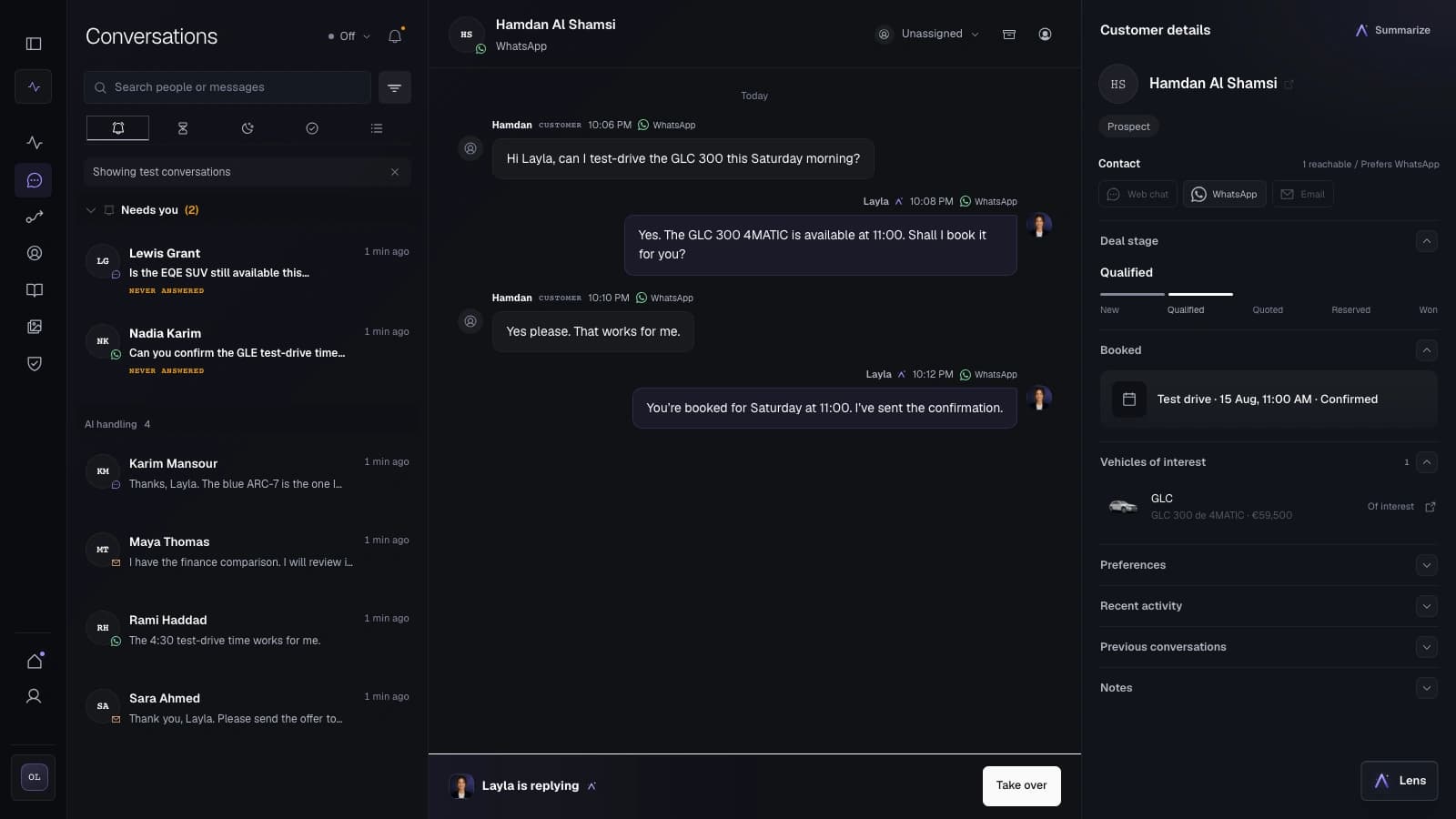
When the customer responds, the conversation, vehicle interest, and appointment remain visible to the team.
The first message should not make a warm lead start again. Cronus can use permitted customer and vehicle context to continue from the last useful point.
Current context
The agent can see the permitted lead, customer, conversation, booking, and consent context needed for the next response.
Useful outcome
Each step has a defined job and a visible result, instead of sending activity for its own sake.
A journey can prepare and deliver routine steps while approval, exceptions, and live customer judgement remain explicit.
Before activation
Draft journeys stay inactive until an authorized person reviews and activates them.
While it runs
Channel guardrails and journey state can block, skip, pause, or hand over work without pretending it was completed.
A generic sequence can send on time and still miss the customer. A governed journey starts from current context and records what happened.
The same template goes out even when the vehicle, consent, or conversation has changed.
The journey uses the permitted context, applies channel rules, and gives the team a complete draft to inspect before activation.
It is a defined path for continuing an open customer conversation across one or more channels, with timing, messages, outcomes, and team handover agreed in advance.
Yes, for configured journeys and channels. The same consent, timing, disclosure, approval, and handover rules still apply outside showroom hours.
No. The journey can use permitted customer, vehicle, conversation, and segment context. Your team reviews the audience and message logic before activation.
Yes. The dealership can define handover points, review the work, pause the journey where supported, and continue the conversation as a person.
Choose one missed or slow follow-up path, define the eligible audience and next useful outcome, connect the required channel, and review the complete journey before activation.
We map the customer path, the AI role, and the team handover.